How it works

From “wow” to “wait… can I actually build this?”

Field House sits between curiosity and the manufacturer. We do the homework in public, show you what's real and what's missing, and connect you when you're ready.

  1. 01

    Explore

    Browse homes by use, size, construction type and estimated factory price.

    Every listing shows the factory price as what it is — a starting number — alongside a clear documentation status. Filter by what you actually need, not what photographs best.

    Explore homes
  2. 02

    Understand

    See what has been documented, what has not yet been confirmed and what must be handled locally.

    Each fact is marked as documented, a manufacturer claim or unresolved. Each home lists what the price excludes, what has to happen on your site and the questions nobody has answered yet.

    The questions we ask
  3. 03

    Connect

    Request an introduction to the manufacturer or provider responsible for the next step.

    Tell us what you're trying to build. A human reads it, and when it makes sense we introduce you directly to the company's sales team. The contract and payment are always between you and them.

    Start your search
A

The first number isn’t the last one

A factory price is the cost of the product at the factory gate or loaded onto a ship. It’s real — and it’s incomplete. We never present it as an installed price.

  1. 01Freight & port fees$4K–$15K
  2. 02Duties & brokerage$3K–$15K
  3. 03Engineering & permits$3K–$15K
  4. 04Foundation & site work$8K–$30K
  5. 05Crane, set & install$3K–$12K
  6. 06Utility connections$5K–$25K
  7. 07Finishing the local work$5K–$40K
Example: installed, not advertised$40K $71K–$192K
Fig. 1Rough U.S. ranges for a small (400–800 sq ft) home shipped from overseas, for illustration only — not a quote. Your site, state, builder and current tariffs change everything, and some line items can run far higher.
B

How we mark what we know

Marketing and evidence look the same on a product page. On ours they don’t. Every fact carries one of three marks:

  • DocumentedField House has seen supporting documentation.
  • Manufacturer claimStated by the manufacturer. Not yet confirmed by Field House.
  • UnresolvedAsked and not yet answered, or answered without support.

And every home carries one documentation status — never a badge that implies a guarantee:

  • U.S. approval documented

    A model-specific HUD, state modular or other applicable approval has been supplied and can be identified. It applies to the programs named — not to every location.

  • Approval varies by destination

    The system may be adaptable, but state and local review is still required for your specific site.

  • Documentation under review

    The manufacturer has supplied material, but Field House has not completed its review.

  • Unconfirmed

    No approval documentation has been supplied. Treat any compliance claims as unverified.

You won’t find “fully vetted,” “approved everywhere,” “guaranteed savings” or a “Field House Approved” badge here. Approval status is model-specific and destination-specific. Only your local building department can determine whether a home may be installed on your site.

C

From the factory to your dirt

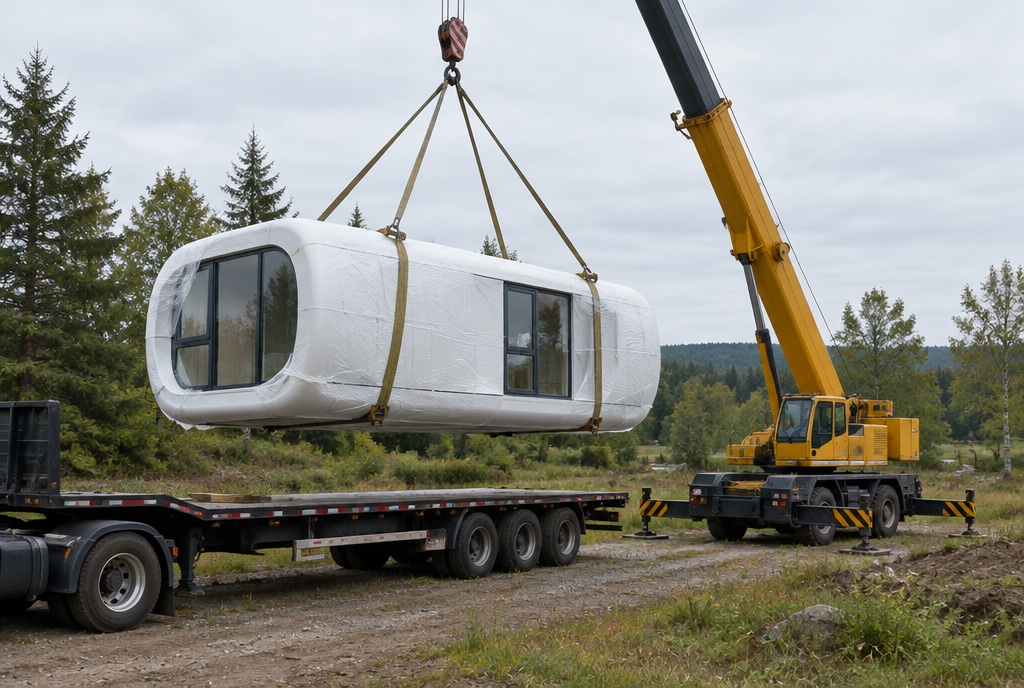
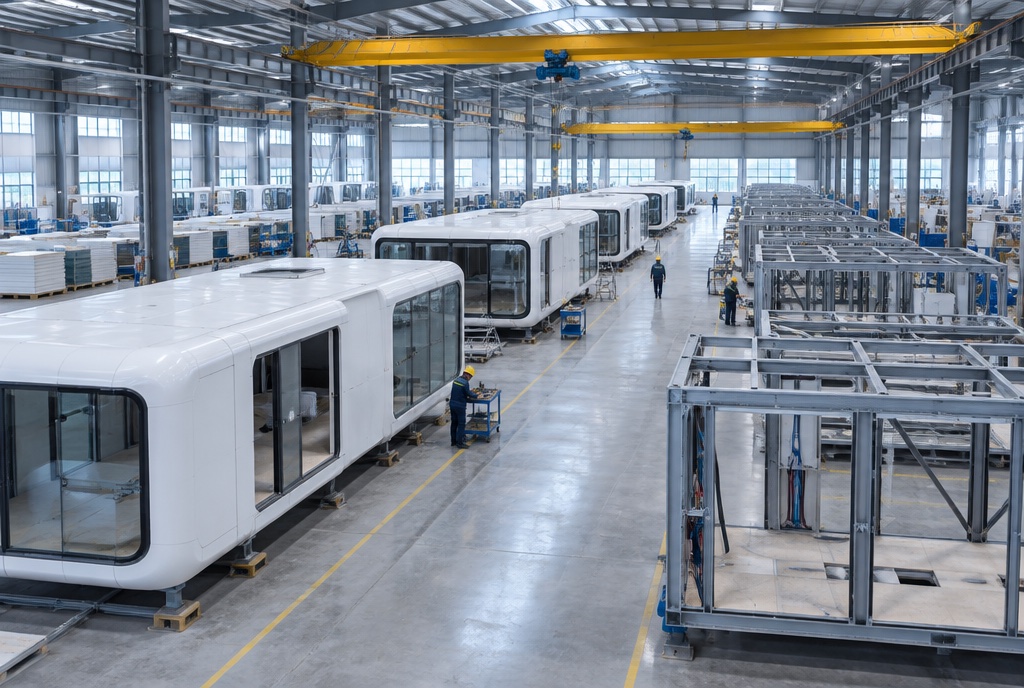
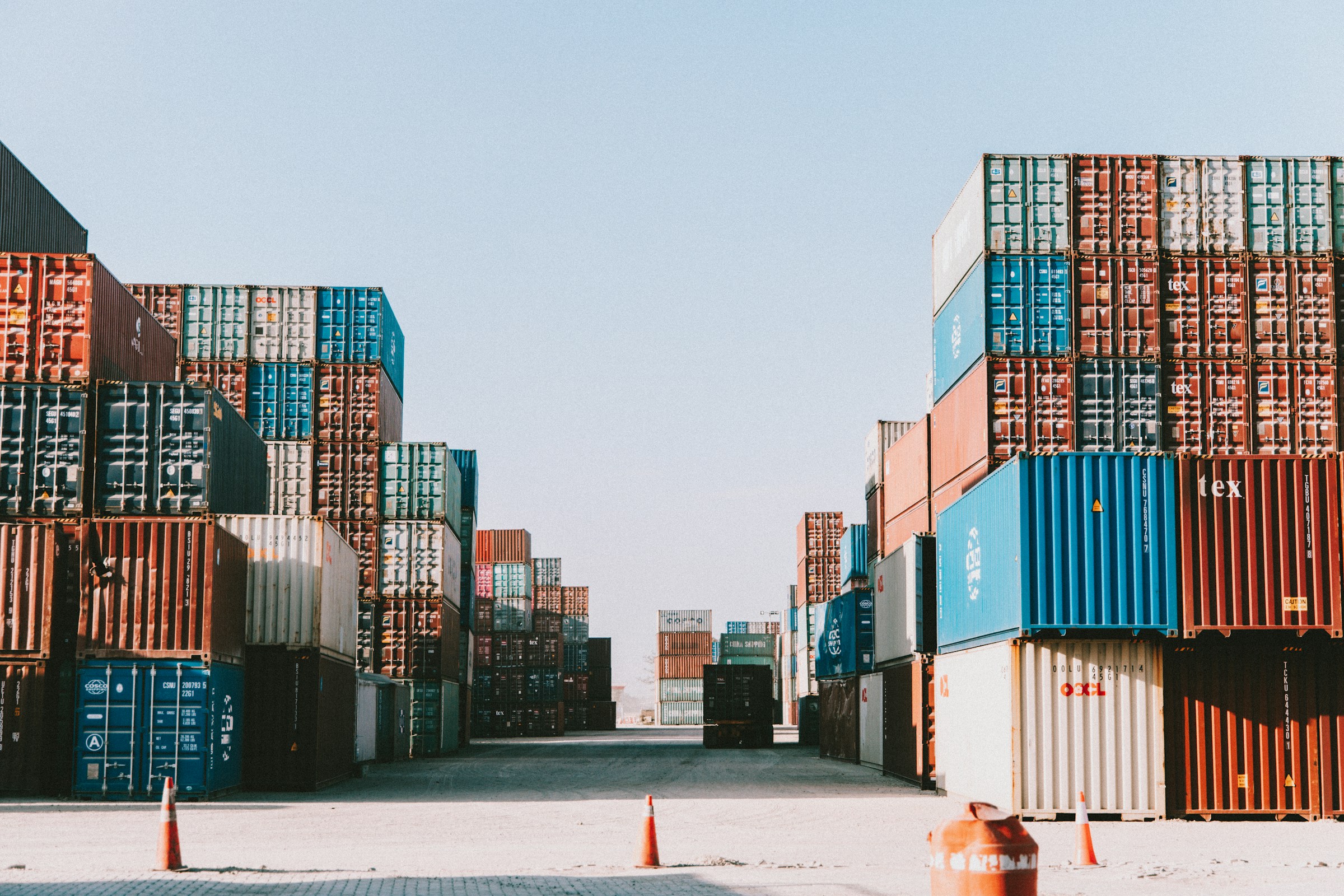
Every overseas home makes the same trip: built in a factory, shipped through ports, trucked to a site someone local has prepared. Each leg has its own questions — and its own responsible party.
A large factory floor with white capsule home shells and steel frames on an assembly line under overhead cranes.
Tall stacks of weathered shipping containers line an empty lane in a port yard under a pale sky.Stock photo
A white capsule home wrapped in protective film being lifted by a crane off a flatbed truck onto a rural lot.
  1. Factory. Production time, specification, quality control, what’s finished before it leaves.
  2. Ports & freight. Container or flat-rack, freight, insurance, duties, customs brokerage.
  3. Your site. Foundation, crane, utilities, engineering, permits and inspections.

Port: stock photograph, Photo: Fejuz / Unsplash.

D

Who is responsible for what

Responsibilities of Field House, the manufacturer, and the buyer with local professionals
ResponsibilityField HouseManufacturerYou + local pros
Researching and presenting homes in plain English
Accurate specifications, pricing and documentation
Introductions between buyers and manufacturers
The sales contract, deposit and payment
Manufacturing, quality and factory warranty
Shipping, customs and delivery arrangements
Engineering, permits and local approval
Foundation, utilities, installation and site work
E

What Field House is — and isn’t

We are

  • A media and research company
  • A place to compare homes and the evidence behind them
  • A referral service that makes direct introductions
  • Paid by manufacturers on completed sales — disclosed

We are not

  • The seller or importer
  • A contractor, engineer or installer
  • A permit expediter or warranty provider
  • A payment processor. We never take deposits.

Start here

So… what are we building?

Eight quick questions. Tell us the dream, the land, the budget and what’s making you nervous. A human reads every one.

What are you looking to build? About 3 minutes · No payment, ever